
News & Muse (March 2021): A Year of Fire and Ice . . . and Here Comes Spring, Again

I mentioned last month that I was seeing hints of spring. As usual in Oregon’s Willamette Valley, where we often get one last whiplash from winter before it leaves for good, we had the worst ice storm two weeks ago this area has suffered in 40 years. It wreaked havoc on the city’s trees and resulted in widespread power outages for days on end. While we were one of the lucky few who never lost power (well, for fifteen minutes, which hardly counts), there were thousands without basic electricity for over a week. And yet today, as I type this, the sun is out, daffodils and crocuses are blooming, and even though I see plenty of downed tree across the street from my office window, spring is well on its way. Of course, we’ll see, right? After the the last twelve months, who knows.

And those twelve months have been a heck of a ride: a global pandemic (and the economic shocks that accompanied it), the end of Trump’s toxic presidency, devastating forest fires raging less than thirty miles from my house, and finally a wicked ice storm. My own family has been very fortunate, however, and for the most part, I’ve just continued plugging away. I did have to temporarily set aside a long book a couple weeks ago, which was very painful, but the longer I’ve been at this the more I’ve come to trust my own process. (I pretty quickly switched to another book). I also think it’s important to take some creative risks, both with your choice of material and your processes, and this book was certainly a big one. It can’t be a risk if you don’t occasionally fall flat on your face. My gut tells me I just need some perspective on it, but we’ll see. 

Not much other news at the moment. Since I’m not using Instagram for much these days, I decided to occasionally post daily practice drawings over there for the fun of it, and for extra motivation to keep practicing. You can find them over at http://www.instagram.com/scottwilliamcarter

A Bit of Whimsy: Joy Unleashed

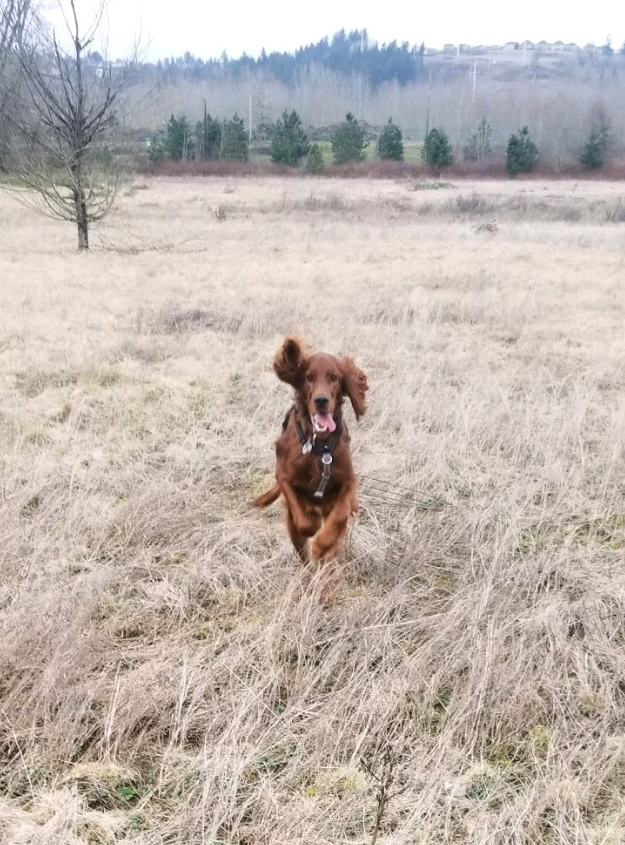
Heidi and I took Rosie to the largest and most wild park in the city and found a big empty field for her to run. We’re still practicing her recall with our now nine-month-old Irish Setter, and she’s generally pretty good about it, but we do have to be careful. Seeing her unadulterated joy as she gallops around off-leash is pure heaven.

Scott Recommends

A Promised Land by Barack Obama. Like many people, I saw Barack Obama’s keynote address at John Kerry’s Democratic National Convention in 2004 and was captivated by his oratorical skill and his life story. Was he just a flash in the pan that could give a good speech, though? The more I learned about him early on, even before he won his Senate race—in his interviews, in his books, etc—the more I became convinced that his public speaking ability wasn’t even his  greatest strength. His evidence-based intellect, his cool-under-pressure temperament, and his optimistic orientation toward life (an optimism grounded in political acumen, which his opponents would often underestimate at their own peril), he had many attributes, I thought,  that could possibly make him a successful President someday, if the stars aligned. Well, of course the stars did align, and his first post-Presidential book (the first of two volumes) is a great chronology of his rise to power, a balanced historical perspective of his first few years in office, and a wonderfully written memoir by its own merits. As someone who generally follows the news fairly closely, much of the actual information wasn’t new to me, but it was still a great pleasure to read. 

Better Angels: Why Violence Has Declined by Stephen Pinker. I listened to Pinker’s exhaustive but very convincing case on why the world is more safe, more peaceful and more civilized for more people than at any other time in history as an audio book, which made it take a long time to finish, but it was well worth it. I love books that challenge conventional wisdom, and do so with such deft. Progress does not come in a straight line, and to say we live in a much better world overall than our ancestors does not diminish the challenges of today. I also love writers unafraid to take on any particular group’s sacred cows so long as they adhere to the credo of allowing your conclusions to be guided by evidence and not the other way around. If you’re feeling down about the state of the world, this book is a great antidote. 

The Ezra Klein Show (podcast): The Senate is Making a Mockery of Itself. I’m not a big podcast listener. I don’t subscribe to any of them, really, but I sometimes end up listening to a few now and then because of a topic or discussion I want to learn more about. Klein’s discussion with Adam Jentleson, the author Kill Switch: The Rise of the Modern Senate and the Crippling of American Democracy, is as good as any about why getting rid of the 60-vote threshold in the Senate (the so-called filibuster rule) might just be the most important change that needs to be made if the United States wants to prevent gridlock from grinding our country to a halt. Just about every argument in favor of keeping this arcane procedural gimmick—a fluke which is not in the Constitution, and only came about as a mistake — is a myth. Definitely worth an hour of your time.

News & Muse (February 2021): Hints of Spring, A Little Writing Advice

We had some snow the other day. Just an inch or so. As usual in the Willamette Valley, it didn’t last long. Otherwise, I’m seeing hints of spring everywhere—both in reality and metaphorically. The days are getting longer. On my daily walks, I’ve started to see crocuses and other plants start to bloom. A new President in the United States has brought a palpable sense of relief to those of us who believe in decency, democracy, and at least an attempt to adhere to the truth. The vaccine roll out, while bumpy, is picking up steam. We’ve lost a lot of good people to COVID-19, and the winter of this pandemic isn’t over by a long shot, but at least it feels like we’re heading in the right direction.

Productivity has been pretty good lately, mostly by just sticking to a daily word quota and staying off the Internet until after 5 p.m. Funny how straightforward it is, really, and how I have to keep reminding myself of the basics year after year. I feel like a Zen Buddhist coming back to the breath. Read a lot (breath comes in), write a lot (breath goes out). When I’ve taught writing courses, I generally start out by telling the students that if they stick to a daily word count of new material no matter what, plus read at least a book a week, they’ll probably get good enough to eventually develop an audience. If they don’t, no matter how many classes they take, they probably won’t. I tell them if half of them quit the class right now and did just that, while the other half went on to MFA programs but didn’t commit to being at least moderately prolific writers and voracious readers, I would bet on the half that quit my class. I usually got a lot of shocked expressions, but it really is true, I think.

Here’s a last little thought on this, to illustrate that being “moderately prolific” is not as difficult as some might suggest. A lot of people consider Robert B. Parker, a grand master of crime fiction, a fairly prolific writer. Now, we don’t know if he wrote under other names, or how many manuscripts he had to throw away, but if you take him at his word (always a dubious proposition for someone who makes stuff up for a living), he was a light outliner who mostly wrote one draft and he didn’t write under pseudonyms. He published something like 70 books that he wrote himself (I’ve probably read half of them), which amounted to about 4 million words. His books were fairly short by modern standards, so keep that in mind, but few people would argue about the average quality (he has duds like all long-term writers). He had about a 40-year career before he passed away. If you do the math, he would have had to write . . . about 250 words/day.

One manuscript page.

I know that’s pretty amazing for a lot of folks, and yes, these weren’t epic fantasy tomes we’re talking about, but still, he just did the work day after day. Certainly there are writers who have written much, much more, but I mention Parker because few would argue that he didn’t leave behind a substantial body of high quality work. Because when you get right down to it, being prolific is just another way of saying you’re consistent.

A Bit of Whimsy

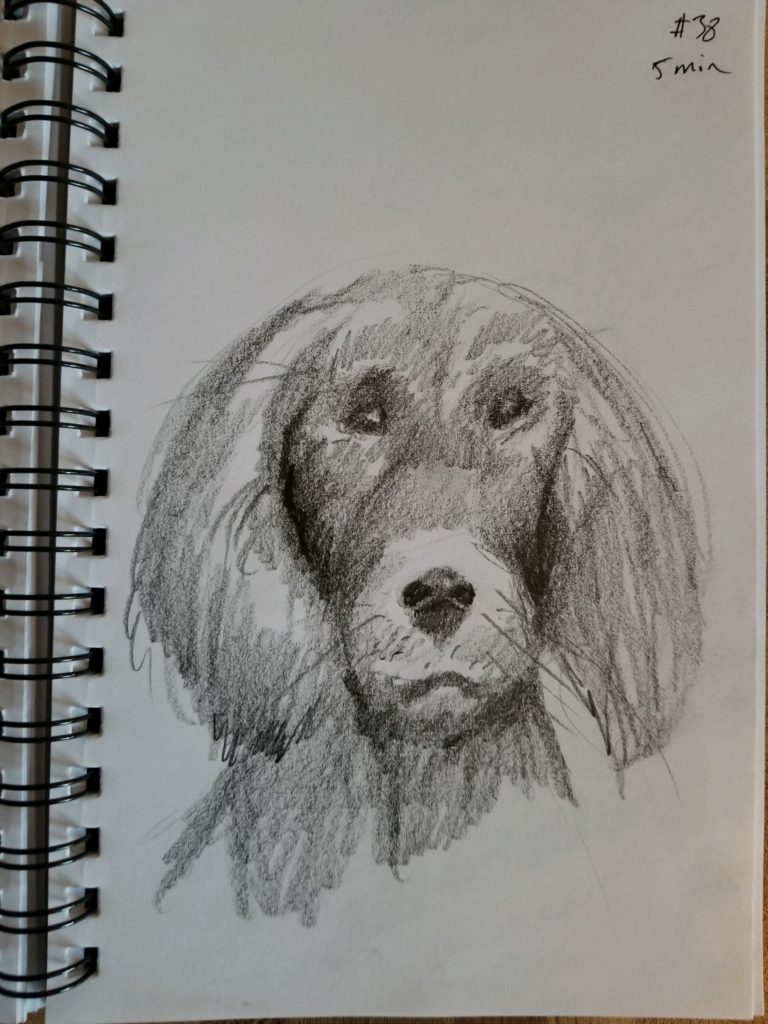
That’s a quick five-minute sketch of an Irish Setter from one of my drawing notebooks. Not long ago I committed to at least a drawing a day. Some days I only do one, some days five or more. They’re not really meant for public exposure, but I thought it might be fun to share one now and then. The goal is very simple, whether I’m drawing something I see, something from a magazine, or a picture that I bring up on my tablet: to recreate a sense of what I see (the fundamental skill of all visual arts, or so it was explained to me by a very good professional artist and teacher once) in just a few minutes.

Scott Recommends

The Roadside History of Oregon by Bill Gulick. Back in my twenties when I owned a used bookstore, I used to dip into this book when it passed through the store, but I’d never taken the time to read it cover to cover. When my daughter gave it to me as a Christmas gift, I figured now was the time. I’m glad I did. Gulick’s sprawling history of my home state, using the highways as a loose structure, is full of fascinating anecdotes of the many colorful figures who populated Oregon’s early days. It’s particularly wonderful since I’ve visited the majority of the cities listed. I’ve always said that Oregon is like a microcosm of the country as a whole, since it has a little of everything: high desert, lush valleys, coastal regions, mountain peaks, all within a day’s drive, all the regions very distinct from one another. There’s a climate and style of life for just about everyone in Oregon, which makes it such an absolute gem. 

American Hustle. I missed this David O. Russell’s film when it came out in 2013. A New York grifter and con man (a nearly unrecognizable Christian Bale) is forced to work with an FBI agent (Bradley Cooper) to perform an elaborate sting operation to avoid jail for himself and his lover (Amy Adams). Loaded with other stars (Jennifer Lawrence, Jeremy Renner, Robert De Niro), it’s the kind of film that often loses its way when too many actors ham it up on screen, but that didn’t happen here. Great acting, great writing—it was a fun film with some nice twists.

Love Just Screws Everything Up by Lynn Johnston. The 17th collection of the popular For Better or For Worse comic strip, following the life and times of the Patterson family, this strip ran for 29 years and ended its run in 2008. I’d caught the odd strip here and there over the years, back when I was still mostly reading the comics via the funny pages in a newspaper, but I’d never bothered to read a full collection. It’s great stuff. Unlike most strips, Johnston ages the characters (not quite real time, maybe a a third of real time?), so you follow the family’s many ups and downs in life just like the rest of us.

Bad Business by Robert B. Parker. Spenser starts off investigating whether a woman’s husband is cheating on her and ends up uncovering corporate malfeasance on a massive scale, a very unorthodox love triangle, oh, and several murders to boot. A fun read, and the extended cast (the beautiful and intelligent Susan, the inscrutable Hawk, and others) always help bring the story to life. While I enjoy Parker’s spare writing style, this was a bit bare bones even for him. It really is the bare minimum, I think, and there were scenes with almost no setting whatsoever. Still, it’s always a pleasant afternoon I get to spend with Spenser and company.

Since We Fell by Dennis Lehane. A books that begins as a fascinating character study and picks up steam as the suspense, and twists, mount, Lehane’s book chronicles the story of Rachel Childs, a once-promising journalist who becomes a shut-in, and the mystery of a husband who may not be what he seems. I haven’t read too many of Lehane’s books (mostly the Kenzi and Gennaro P.I. series, which I’m a big fan of ), but I will definitely be looking for more. My issue is that I seldom want to read a book if I’ve seen the movie it’s based on, and since I’m seldom reading what’s popular now, I’ve often seen the movie before I get to the book. Certainly a problem for me, not Lehane!

News & Muse (January 2021): A Very Rainy Christmas

It’s that time of year in Oregon’s Willamette Valley when it’s mostly rainy and dreary. Will we get snow? Some years we do, some we don’t, but when we do it usually isn’t much and it almost never sticks for long. I usually don’t mind the rain, of course, being a writer and a reader, but usually by March I’m ready to see more blue sky. My hunch is that feeling will come even sooner this year, considering how trying 2020 was. But then, every place you live has its pros and cons.

As grim as the pandemic has been this winter, and it’s been plenty grim, the vaccines are rolling out, though, so life feels like it’s getting better. While it will take quite a while to vaccinate the entire world, the most vulnerable, and most likely to be hospitalized, should get vaccinated much faster, which means both the death toll and the strain on our hospitals should start to lessen more more rapidly, I should think. We shall see.

My immediate family is all in good health. For me personally? Just working away, on two books at the same time, actually. Not something I usually like to do, but it just worked out that way. Kids are approaching the halfway mark of the school year, and we’re all hoping that by Fall 2021 that face-to-face classes will be the norm again.

Hoping. I find myself using that word a lot lately. While it rained all day on Christmas for us, the sun came out in earnest the next day, which seemed symbolic.

A Bit of Whimsy: A Very Rosie Christmas

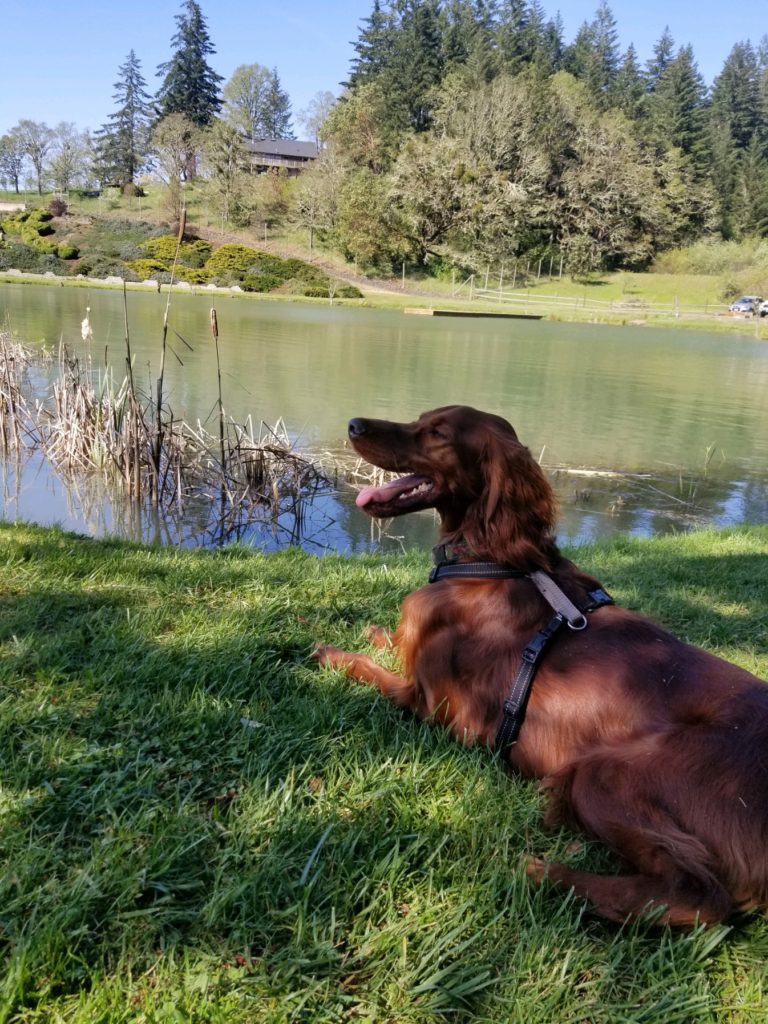
Here’s Rosie at 7.5 months, looking adorable as usual. Of course, her cuteness hides the fact that she’s often known around these parts as THE TERRIBLE RED BEASTY, for her propensity to steal socks, chew up shoes, and destroy tree ornaments.

Scott Recommends

Uncle Frank. This Amazon Studios production is just the sort of movie that makes me so optimistic about the future of filmmaking, despite the fairly grim future I foresee for movie theaters in particular. It’s doubtful this poignant drama about a gay man from South Carolina, and his relationship with his family as he returns from New York City in 1973, would have seen much time in a theater—especially now, but probably not ten years ago either. And yet, it’s one of the best films I’ve seen this year. Great writing, great acting, highly recommended.

Sunset Express by Robert Crais. Another great entry in the Elvis Cole series, a Los Angeles-based private investigator with a wry wit. What I admire about Crais, just as I admire about writers like Robert B. Parker and John D. MacDonald, is how easy it all goes down. I don’t mean the story, which in this case involves an extremely rich restaurateur accused of murdering his wife, a police detective accused of tampering with evidence, and a powerful celebrity attorney, but the writing itself. The voice is strong and bold and grabs you from page one. It’s always a pleasant few hours I spend with Cole and his assorted friends and associates.

M*A*S*H. This has been one of my go-to shows during the pandemic lately, something I can watch for thirty minutes while folding laundry or just a short escape before bed, and I’m amazed at how well it still holds up more than thirty years after the final episode aired (1983). Sadly, it might have something to do with how evergreen the subject matter is (war). Lasting eleven seasons (and eight years longer than the Korean War in which it was set), it has just the right balance of pathos and humor. I could do without the laugh track, of course, but that’s my one small nit. The whole series is available on Hulu.