Summer Update: Playing the Long Game

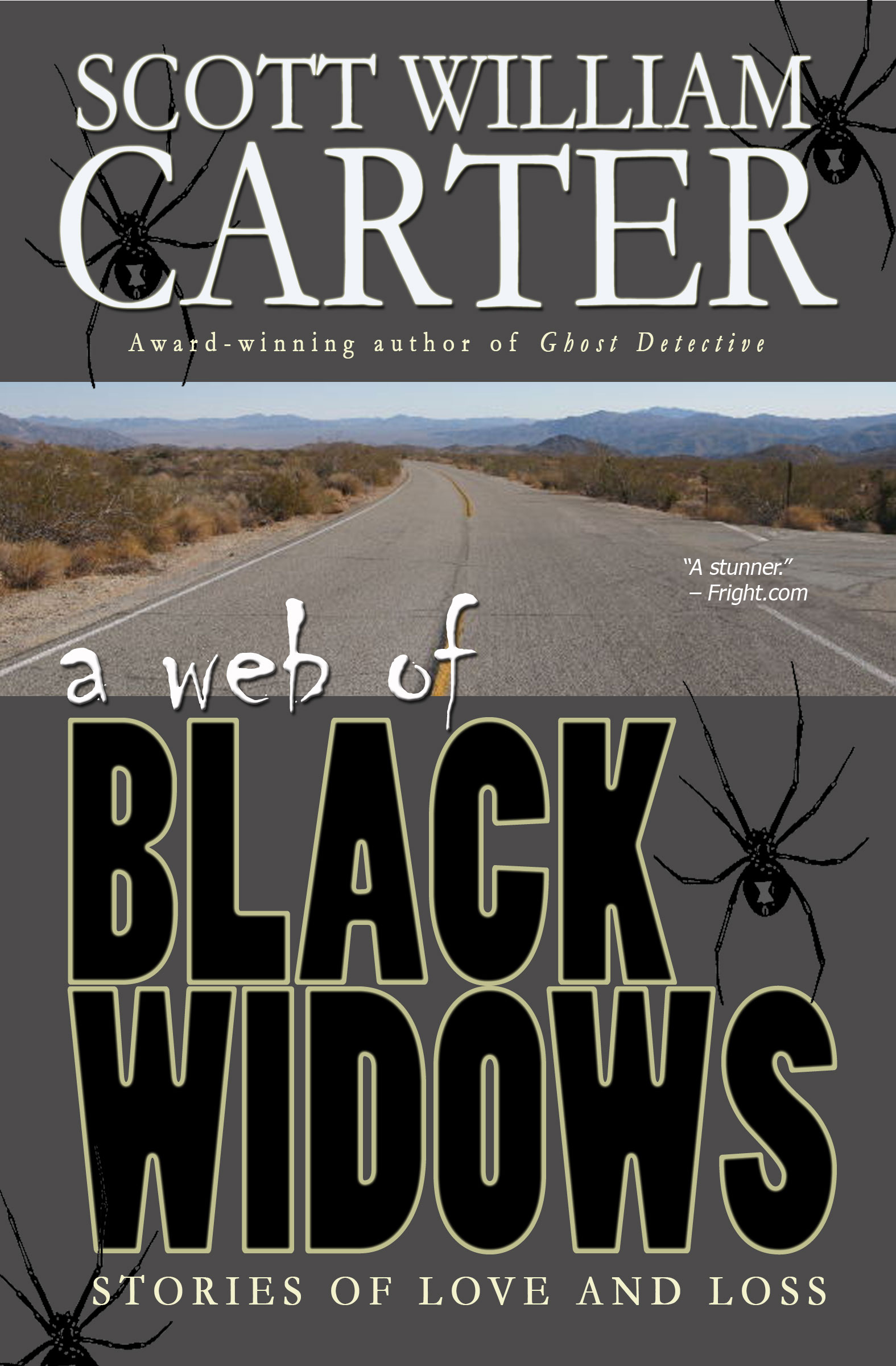
With a book and two collections published in the span of a couple months, this last spring was one of the biggest periods for my writing career.  Unfortunately, no, Oprah hasn’t called, but since over 75,000 novels are published each year just by major presses, I can’t say I’m too surprised.

How do I feel about this turn of events?  Pretty darn good.  And yet, I can’t say life has changed all that much.  Some family, friends, and coworkers may see me in a slightly different light — it’s one thing to tell them you’re a writer, and another for them to see your book on the shelves at Borders — but life for me continues pretty much as it was before:  Help people with technology issues at the university by day, be a good husband and father by night, and squeeze in the writing wherever I can.

My daughter’s seven, just completed first grade, and is having a blast riding her bike without training wheels.  My son’s four and we have hopes he’ll survive childhood, yet his indefatigable ability to put himself in harm’s way never ceases to amaze us.  Though my wife’s foresight in putting rubber padding on the edge of the fireplace — seven years earlier — finally paid off the other day.

Did all the publishing doors open in New York after I published my first book?  Sadly, no.  I’ve had a lot of near misses with some other books lately, which can be frustrating, but it’s also a reminder that I’m writing well enough to attract the attention of major editors.  The temptation is to rush out there and self-publish, especially now when there’s so many opportunities for writers to do just that and actually make some money (check out J.A. Konrath’s blog for more info on this), but if  you want to reach a wide audience, that’s not always a smart move.  It’s a smarter move than it was ten years ago, but it’s still not usually the best move.

Often the best move is to keep putting your manuscripts in front of major NY editors because they’re the ones who can give you access to the widest possible readership.  This may not always be true, but it’s still true now, and it’s certainly true for the kind of novels I’m writing. However, because publishing continues to change at a rapid clip, I’ll probably have to re-evaluate this decision fairly often.

I keep focusing on the long game.  I keep focusing on keeping productivity high, on striving to write the best I can, and placing my trust that in the long run that if I keep reaching for the widest audience possible, good things will happen.  That’s all you can do as a writer.  I recently finished my seventh book, a little fantasy with a very unique hook, and it’s now in the hands of editors.  I’m already well into my eighth, a young adult novel with a very distinct voice.  I continue to toss in short stories here and there, but most of my focus has been on the novels.

What else?  I’m dramatically curtailing the time I spend online.  I don’t post on this site all that often, or on the social networking sites either, but still, I realized recently that far too much of my reading time has been devoted to the Internet, particularly the most shallow and insidious form of it.  While there’s lots of good stuff out there, it’s come at the expense of spending that time with good old fashioned books.  Since books, and novels in particular, are my creative fuel, that’s something I have to change.  To use an analogy, it basically feels like I’ve been consuming too much junk food and not enough stuff that’s good for me.

The Internet can be a powerful tool, to be sure, but that big flowing mass of information can be terribly addictive.  Before you know it, you’re checking your email every fifteen minutes and worrying about whether Lindsay Lohan has gotten out of rehab.  Not good.

I’m not sure how other writers feel, but for me, there is a refreshing clarity of thought that comes when I disengage a bit from the hive mind, when I stop worshiping at the Altar of the Now and work at my own pace and in the solitude of my own thoughts.
Games Writers Play #25: Stop When You’re On a Roll

“I never come back to a blank page; I always finish about halfway through. Hemingway taught me the finest trick : ‘When you are going good, stop writing.’ You don’t go on writing and writing until you come to the end of it, because when you do, then you say, well, where am I going to go next? You make yourself stop and you walk away. And you can’t wait to get back because you know what you want to say next.” — Roald Dahl

No matter how productive you are as a writer, it’s doubtful you can write all the time.   At some point, you’ve got to call it a day, even if it’s just to catch a few hours of sleep.  The question is, where do you stop?  What’s the best way to quit so that you have the easiest time starting again the next time you sit down to string some words together?

Easy:  Stop when you’re on a roll.

In other words, stop when the words are flowing, when you know where the story’s going, when you can vividly see the road ahead.  It’s much easier to get those creative juices flowing if you’re not staring at a blank white page.  I sometimes even stop in the middle of a sentence.

This is actually harder to do than it seems, because when you’re in one of those creative fugue states, you don’t want to quit, but that’s actually the reason why you should.  You’re quitting the writing session in a positive mental state and with plenty of momentum.

Note:  Now that I’m on a bit of a roll myself, I’m going to be taking a break from the Games Writers Play series.  I’ll likely pick it up again at some point, but I want to focus 100% of my creative energy on the new novel.  Thanks to everyone for reading, and an especially big thank you to those who donated!

-+-


One of the ways I can justify writing these “Games Writers Play” posts for free is by putting a donate button at the bottom of these posts.  If you find them useful, even a small donation of a couple dollars helps justify my time.  If you can’t donate, please help spread the word by linking to these posts.  Thanks!
-+-

All posts in this series can be found at
www.gameswritersplay.com

Games Writers Play #24: Write a Novel in a Month

“I know you’ve heard it a thousand times before. But it’s true – hard work pays off. If you want to be good, you have to practice, practice, practice.” — Ray Bradbury

I hesitate even mentioning this game, not because it’s not good, but because it’s so famous that it seems superfluous.  But because it is such a great writing game I want to include it in my series.

Write a novel of at least 50,000 words in one month.

That’s right, we’re talking about the same game that motivates thousands of people around the world in the month of November:  National Novel Writing Month, or NaNoWriMo for short.  If you want extra encouragement, check out their site and participate in the month of November.  But you don’t have to do it in the month of November.  Any month will do.

Now for those of you crying out that no good books could possibly be written in a month, I must remind you that Ray Bradbury wrote Fahrenheit 451 in nine days in the basement of UCLA’s library on a coin-operated typewriter.  And fifty thousand words, divided by 30, is about 1700 words a day.  Even if you have a job, if you just dedicate your evenings to it for a month, you should be able to do it.  Why, if take a look at their site, you’ll see that lots people have.

-+-


One of the ways I can justify writing these “Games Writers Play” posts for free is by putting a donate button at the bottom of these posts.  If you find them useful, even a small donation of a couple dollars helps justify my time.  If you can’t donate, please help spread the word by linking to these posts.  Thanks!
-+-

All posts in this series can be found at
www.gameswritersplay.com


Games Writers Play #23: Forking From the First Line

This is another game that works best if you you’re using a book or story you haven’t read — much easier to let your imagination go where it wants go.  Here’s how it works:

Pick a book or short story at random.  Type the first line and only the first line into a blank document.  Now write a couple pages using that first line to see if it sparks a new story.

If it’s a famous first line, you’re better off deleting or modifying it when you’re done to avoid the inevitable comparisons (unless you’re doing a parody), but otherwise most first lines are not all that memorable.

I call this game “Forking From the First Line,” because essentially what you’re doing is taking a different fork in the road from that first line.  For kicks, you could go back and read the other writer’s short story or novel later on, to see how different they are.  And trust me, they’re going to be very different.

-+-


One of the ways I can justify writing these “Games Writers Play” posts for free is by putting a donate button at the bottom of these posts.  If you find them useful, even a small donation of a couple dollars helps justify my time.  If you can’t donate, please help spread the word by linking to these posts.  Thanks!
-+-

All posts in this series can be found at
www.gameswritersplay.com