The Literary Lottery

The first professional fiction sale I made was a short story set in somebody else’s universe.  It may also very well be the last time I write that kind of story. 

Let me explain.  This has nothing to do with how I feel about the story (I still love it) or the universe (the same).   The story, “Protecting Data’s Friends,” was purchased by Dean Wesley Smith for the Star Trek: Strange New Worlds anthology. For ten years, Pocket Books put out an annual collection of the best Star Trek stories from non-professional writers — meaning, writers who hadn’t sold a novel or more than three stories.  We were paid ten cents a word, and I still have a copy of that check framed on my wall as the first money I was ever paid for my fiction.  It was a great day when I learned I’d sold it.

So I have nothing but good feelings for that story.  There are writers out there who think it’s somehow shameful to write “media-tie-in” fiction, that it’s akin to slumming, but I don’t feel that way at all.  I also don’t begrudge any writer for writing stories or novels set in other people’s universes; if they’re having fun, and making money, it’s all good.  Growing up, some of the first books I cut my teeth on were media-related, which proves it really can be gateway fiction.

But here’s the deal.  If you play in somebody else’s sandbox, you don’t get to play the literary lottery. 

What’s the literary lottery?  If you write a book geared for a mass audience that’s completely your own work, every time it lands on an editor’s desk, you’re playing the literary lottery.  It may be a book that’s lucky to sell a few thousand copies or it may be the next Harry Potter.  It may garner you a modest advance or a mega deal of over six figures.  Or maybe it doesn’t sell at all.  You just don’t know.  That’s what makes it the literary lottery.  

Now, it’s true that very, very few books have the potential to be bestsellers.  In fact, at least two-thirds of the time, I’d be willing to bet good money after glancing at a book whether it does or doesn’t have that potential.  That’s not to say it’s a bad book.  It’s just that some books are slotted at a certain level.  But if you write a book set in somebody else’s universe — what’s usually called “work-for-hire” — in almost all cases you don’t own the copyright to that work.  If it becomes a mega seller, you may benefit beyond your initial advance, or you may not (it depends on your contract), but you have no control over that product.  With books that are a hundred percent your own, however, you have full control unless you sign any part of it away. 

So if you’re like me, with a day job, two kids, and a crazy busy life, you have to make certain choices with your writing time.  Right now, at my maximum, I think I can write three books a year, as well as a handful of short stories thrown in for good measure — that’s if I stick to my four or five pages a day quota.  Should I spend that time writing books geared for the widest audience possible, or should I write a book set in somebody else’s universe? 

Different writers will answer this question differently.  It can be tremendously fun playing in somebody else’s sandbox.  Like I said, I loved writing that Star Trek story.  But the next year, since the other stories I’d sold hadn’t been published yet, and I was still eligible for Star Trek Strange New Worlds, I wrote another one.  And guess what?  The editor didn’t buy it.  It’s okay, it happens, but now what?  Here’s the problem:  There were no other markets for that story. 

When I look at the three dozen short stories I’ve sold so far, less than a third sold the first time out of the chute.  I had one story I sold after a dozen rejections for over a thousand dollars.  Once your writing gets to a certain level, it’s mostly about taste and timing.  Sometimes a story (or a novel) needs to land on a lot of editors’ desks before it gets bought. 

For me, though, the most important reason for writing only my own fiction has nothing to do with the fiction itself.  It has to do with my finances.  You see, my day job completely covers my expenses.  This is important:  I don’t need the writing money to survive. 

This gives me a freedom that full-time professional fiction writers may not have.  When the mortgage payment is looming, or the creditors are filling up your answering machine demanding payment, you don’t have the same freedom.  Someday I may have that problem, but right now I can focus only on the books that have the highest probability of reaping me the biggest rewards.  Writers like to dream about going sans day job, but a day job does have certain advantages.

It allows me to play the literary lottery each time out of the chute.

So when someone asks me if I’ll ever write more Star Trek stories, and I say probably not, this is the reason why.  It’s not snobbery.  It has nothing to do with Star Trek itself — I love the universe, both the show and the books — and everything to do with having the freedom (a day job that pays the expenses) to do what’s best for my writing career long term. 

Of course, this doesn’t mean it will always work.  It just means I’m reaching for it.

10,000 Hours X 500 Words an Hour = ?

Most writers don’t like math, but I’m in the mood to talk about the above formula this morning.  First, let’s start with two numbers for the aspiring professional fiction writer: 

  • 10,000
  • 1,000,000

I was thinking about these two numbers this morning on my way to the day job.  I was thinking about how hard I’ve worked over the years to get myself into this position — where I’ve sold a book and three dozen short stories, and have two more books that I feel good about now out in editors’ hands.  There are no shortcuts, you know.  I sometimes get the feeling when I talk to aspiring writers that they’re looking for shortcuts — tips and tricks to spare them the long agonizing years of work to pound their craft into shape.  But no, the road is hard.  How fast you go down the road depends solely on how hard you’re willing to work.

But what does that mean?  That’s where those two numbers come in.  The first, 10,000, is the number of hours of concerted practice various assessments have determined it takes to reach a level of mastery in any field.  Let’s break that down.  If you practiced an hour a day, every day for a year, you’d end up with 365 hours.  If you did that for ten years you’d have 3650 hours.  How long would it take to reach 10,000 hours at one hour a day of practice?  The answer is 27.4. 

However, when they’ve studied professional musicians, they find that those who achieve mastery (even the really young ones) practice more than an hour a day.  In fact, it’s closer to three to four hours a day.  At three hours a day of practice, that would be 1095 hours.  Let’s say you miss a few days here and there due to illness and other matters and round it off at 1000 hours.  So according to this formula, if you practiced three hours a day, you’d achieve mastery in about 10 years.  Which, interestingly enough, is about the length of time they’ve found for very serious musicians.  If they start seriously practicing at age 10, they achieve mastery at age 20 and everyone hails them as geniuses when in fact they just put in the hours. 

This is why I tell people I wish I worked harder earlier on.  The people who achieved early success in writing did so because they worked harder, not because they were more gifted.  I didn’t realize how hard I needed to work until I reached my mid twenties. 

The other number, 1,000,0000, is the number of new words of fiction many professional writers say you have to write before you get anywhere close to a publishable level.  Let’s break this number down, too.  Most writers shortly get up to a speed of two to three manuscript pages an hour, which is 500-750 words.  Some more, some less, but the bulk of professional writers fall in that range.  Let’s be conservative and say it’s 500 words.  How many hours would you need to write to reach 1,000,000 at that pace?  About 2000.  

Ah, you think, so it’s easier to reach mastery as a writer than as a musician.  Oh, no.  Remember, I said publishable.  That’s akin to being able to get paid to play the piano at your local bar; it means you’re good enough that someone’s willing to fork out some cash for your work.  It doesn’t mean you’ve reached mastery.  What’s mastery?  Well, that depends on your goals, of course, but the bare minimum, I think, would be making a good living from your craft. 

Let’s turn it around another way.  How many words would we write at 500 words an hour for 10,000 hours?  Well, that’s 5,000,000 words. 

And I think that’s a pretty good benchmark.  Ten years of practice at three hours a day, every day, will get you there.  If you put in an hour a day, take thirty years. 

Seem daunting?  Good.  It’s not a road for the faint of heart, so turn back now if you don’t want to put in the work.  Me, I’m hoping my hard work graduates me from playing at the local bar to making a good living at my craft.  How long will it take me to get there?  Well, let me see, let’s crunch some numbers . . . 

Nah, I’m better off spending that time practicing.

So What About Self-Publishing?

There’s an article in the recent issue of Time magazine (available online) on the state of publishing that’s well worth a read:

http://www.time.com/time/magazine/article/0,9171,1873122-1,00.html

“Self-publishing has gone from being the last resort of the desperate and talentless to something more like out-of-town tryouts for theater or the farm system in baseball.”

For myself, I think self-publishing is losing a lot of it’s stigma. I still think it’s better to go the traditional NY publishing route if you can — established publishers are going to be much better at getting your books into the hands of readers than writers, which is, after all, what they are paid to do — but I don’t fault any writer for going this route. What I do fault people for is thinking that there is some sort of conspiracy involved if the “the gatekeepers” won’t publish your book. For most writers, if you can’t get the traditional publishers involved, it’s because A) your book isn’t good enough or B) it isn’t marketable enough. There are exceptions, and the article mentions some recent notable ones, but for the most part, traditional publishers do a pretty good job at vetting books. There’s a reason 99.9% of self-published books don’t sell more than a couple dozen copies. They just plain stink.

That’s okay. All writers stink in the beginning. The same goes for musicians, painters, comedians, and brain surgeons. Thankfully, we don’t let brain surgeons “self-publish” — meaning, get out there on the stage before they’re ready, but writers are not in the same boat. You want to publish before you’re ready, before you’ve put in your million words of practice? Fine. Let the market be the judge. You might be pleasantly surprised — that is, if you’re part of the .01%.

That said, I do think publishing is changing. I don’t see the traditional model going away (although it is adapting, using new forms of technology). But I wouldn’t be surprised if in ten years the majority of even professional fiction writers are doing a mix of traditional publishing and self-publishing. What about that book you published ten years ago that’s out of print? What about that novella that no NY publisher will touch? What about a story collection? There are lots of reasons even writers regularly being published by major publishers might self-publish.

It’s funny, in a way. Self-publishing has gotten the rap of being “vanity publishing,” because so many people go that route because they just want to see their work in print, regardless of quality. And in many ways, because it’s become so easy to do so (check out Lulu.com, for example), that’s what it’s become. But for many professional fiction writers, it seems that vanity is exactly what’s holding them back from using self-publishing as a supplement to the traditional route. Will that change? I think so. I think it already has.

There’s Something to Be Said for Hunger

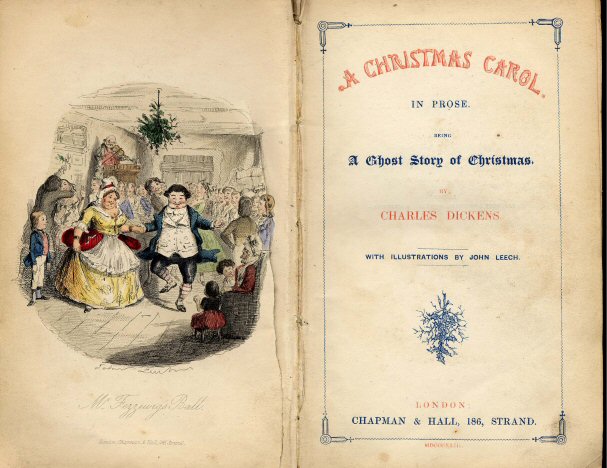
christ_carol.jpgThe other day on the way to the day job, I heard a bit on NPR about Charles Dickens and The Christmas Carrol.  I knew he’d written it in about six weeks, and that he badly needed money at the time, but I didn’t know no publisher would touch it so he published it himself, that he was nearly bankrupt, and that he was still haunted by the fact that his own father had gone to debtor’s prison.  All six thousand copies of the first printing sold out, and the rest, shall we say, is as much a part of history as Tiny Tim’s crutch.  That book really turned things around for Dickens — and according to lots of folks, revived the disappearing traditions of Christmas.

This story really resonates with me because it touches on many of the things I’ve been thinking about lately when it comes to writing.  The first is the value of hunger to a professional writer.  What I mean is, knowing that if you don’t write, and that if you don’t get your work out there if front of people who can pay you money for it, you might actually starve can be tremendously motivating.  Of course, there are other writers who lock up in such a situation, and still others who get ground down by such pressure and eventually quit the business.  It cuts both ways — it can be motivating, but it can take all the joy out of writing.  And the joy feeds another kind of hunger, which I’ll get to in a moment.

I think achieving success as a writer depends largely on figuring out which kind of writer you are, but it can also depend a lot on your life choices.  I tend to like pressure situations.  When I was 24, I quit a good job and started a used bookstore with practically no savings.  I made zero the first year, peanuts the second year, and slightly more peanuts the third year.  I understand burnout, because by that third year the joy had gone out of being a bookseller, and I knew I needed to sell the business to someone with new energy before my souring attitude hurt the business.  Which I did, for a profit.  And I happily went back to having a regular day job.  I recognized the signs and got out quickly before it took too much of a toll on me or the business.

So I completely understand writers who get ground down by the pressure of it all, whose souring attitudes kill the original passion they had for writing in the first place.  Me, I’d apply the same approach to writing in a heartbeat that I applied to the bookstore (do you know how much easier it would be to make a profit when you don’t have to pay for 2000 square feet of prime retail space?), but circumstances have changed in my life.  It was one thing to take my wife along for the ride when I gave up the regular paycheck (although that was stressful enough, believe me, especially when she was between jobs at one point), but taking two children under the age of 6 along for the ride is a whole other matter.  Stress is one thing.  Guilt is a different animal.  I don’t handle guilt so well, and honestly, I don’t want to be the kind of person who does.

When I look at the writers I know who have achieved a lot of success with writing, they fall into two camps when it comes to day jobs.  The first are the ones who made sure writing was the very center of their lives and often got trivial, brain-dead jobs, usually part-time, that allowed them to focus as much as possible on their craft.  They often hopped on and off a day job, were dirt poor much of the time, especially in the early years, but they used the threat of poverty and even homelessness to motivate them.  They were writers, damn it, and they were going to keep on being writers no matter what.

The second type are the people who get careers outside of their writing, frequently get married, have children, and all in all, end up very settled.  They often have the typical middle class life with the house and the two cars and the frequent dinners out at Applebees.  These writers fitwriting into their lives, rather than their lives fitting into their writing (as in the first camp).  Now, remember, we’re talking about the writers who have made it — being roughly defined here as writers who support themselves solely by their writing.  There are lots and lots of writers who have made it who fall into this second group — Stephen King, Nora Roberts, John Grisham, just to name three big ones right off the top of my head, let alone the thousand of mid-listers whose names even hardcore readers wouldn’t recognize.  It’s a lot more common than writers in the first group.  But the danger with this second approach to the serious writer is that you may lose the first thing I wrote about above — hunger. 

You get comfortable.  It’s a little too easy to put off writing, to get distracted by a life full of distractions.  You’ve worked hard, after all.  Don’t you deserve to sit in front of the tube for an hour with a beer watching that Celtics game?  Sure, you do.  But then, you know, an hour turns into two, and then it’s time to shuffle off to bed and start over again the next day.  There goes a life.

If you go with this approach, and your desire is to eventually leave your day job, you’ve got to get hungry some other way.  You have to remember that no matter what your business card says, you’re first, second, and third a writer.  It’s hard.  It’s easy to start to feel the subtle clinch of those golden handcuffs being fastened around your wrists.  Believe me, I know.  I’ve been self-employed, so I can tell difference.  Benefits are nice.  So is a pension plan.  Paid holidays, vacation, sick leave, a comfortable office, the list goes on.

But here’s what’s really interesting.  I am very much a goal-directed person, but when I look at my goals now, the words “become a full-time writer” are not even listed.  That actually surprised me.  And yet, I have every expectation that eventually I will be supported solely by my writing.

Contradiction?  Nope.  Let’s say you have a goal of being a bestselling fiction writer.  For me, becoming a full-time writer is most likely a bi-product of that goal.  What I mean is that at the point your day job becomes a hindrance rather than a help to you, then you’ll leave it behind — either by getting a different day job, or, if you no longer need one, going without it.  That where’s I fall.  I have a great day job.  As long as I stay on track with my writing, I’ll stick with it.  If it becomes a hindrance at any point along the path, then I’ll get rid of it — either by getting a different day job, or by getting rid of the day job altogether, if I feel it benefits me more to go without one.

There are many, many aspiring writers who buy into the false panacea that if they only didn’t have a day job, they’d write so much more.  Nonsense.  The vast majority of writers who leave their day jobs, even the most successful, hardly ever write more than they were writing before.  It’s just damn hard to write more than two or three hours a day, day after day, even twenty days a month.  Short spurts, sure, but the writer who can crank fiction even four hours a day, week after week, is a rarity.  And usually, when they claim they do this, they take long breaks in between projects, which just averages out to the same thing. 

No, the real reason to become a full-time writer is because you want time for everything else — reading, research, movies, time with your family, nights out with friends, you name it.  When you have a day job, and you’re serious about writing, you sacrifice many of these things to work on your craft.

So let’s say you’re an aspiring professional fiction writer.  I assume, like me, you’re in this for the long haul.  The first thing you have to decide is whether you fall into first group or the second.  Then, if you’re comfortable being in that first group, if you’d relish the stress that comes with that gnawing feeling in your stomach that says you haven’t eaten that day, if you find that motivating, then next you have to decide if you’re comfortable imposing that uncertainty on everyone else in your life (if it’s just you, then it’s a short conversation).  If not, then you put yourself in the second camp, too, but you do it fully recognizing that you have to find that hunger in yourself to stay on pace, to work as hard as your soup-eating, bus-riding counterparts. 

There’s perils to both approaches.  One is physical starvation.  The other is starvation of the soul.  In my opinion, it’s even more deadly than the physical kind, but it can motivate you just as well when you pay attention to it.  You don’t want to be walking this Earth but be dead inside.  That ain’t no fun.  I didn’t sign up to become a zombie.

Of course, both approaches can lead to burnout.  How do you avoid that?  By fiercely protecting your passion for the craft.  You got no passion for the craft?  You don’t feel those butterflies in the stomach when you get the urge to write something new?  You don’t feel the thrill of reading another writer who makes you want to write something just as good?  Then give it up now.  Seriously. 

Or if you’ve lost it, make some changes quickly to get it back.  That’s the fire that keeps you going through those hard days.  It’s the fire that you huddle around when night falls and the storm blows into the valley.  You don’t got the fire, you don’t survive those storms.  Cherish the fire.  Protect the fire.  I write because I love stories, both reading them and writing them, and I want to get better at the latter.  As long as I protect those feelings — the thrill of creation, the joy of learning — then there isn’t anything about this business that could ever get me to quit. 

Because, you see, I’d self-publish if I had to.  I’d even sell badly photocopied, stapled books out of the trunk of my car if it came to it.  I’d rather not.  I’d rather a good publisher did that work for me, because, honestly, a good publisher is going to be much better at getting my work out in front readers than I would ever be.  But I’m hungry, you see.  I’m hungry to tell stories, and I’m not going to let anyone take away that hunger — reviewers, publishers, even readers if it comes to it.  (Although if I don’t have any readers, then I’m not really a storyteller in my book, which is a whole other problem).  It may not be a physical hunger, but it’s the best kind.  In the end, it’s the kind of hunger writers in both camps have to have.  You lose that hunger, that love of storytelling, the joy of getting better at it, then it’s just a job to you, and there are much easier jobs out there. 

Charles Dickens may have felt actual physical pangs of hunger, but he had the other kind of hunger, too. He wanted to write a damn good tale, have a lot of people read it, and put bread on the table for his family.  He was having fun.  He felt the love of the craft.  And millions of people around the world — everyone who’s ever read A Christmas Carrol or seen a play or movie version of it — have benefited from his hunger.  So if you’re an aspiring professional writer, whatever approach you take to your writing, stay hungry.  The right kind of hunger.

You know exactly what I mean.