Selling Your Book: Ten Tips on Creating a Sense of Urgency Among Agents and Editors

A friend of mine who’s recently had a number of editors request his manuscript asked me how I created a sense of urgency among agents and editors when I was sending out The Last Great Getaway of the Water Balloon Boys — since that was something I mentioned to him when I talked to him at a recent writer’s workshop, about the value of creating a sense of urgency.  I was going to answer him directly, but I thought my thoughts on this might benefit other writers, too. This is just my opinion, of course, and what I think worked for me, so take it for what it is. Other writers may have different experiences.

1. Have a great manuscript. I know it goes without saying, but well, I’m saying it anyway. Nothing you do will matter if you don’t have a great manuscript. However, remember that beauty is in the eye of the beholder, and where one person sees a diamond in the rough another sees only a lump of coal. There is no book ever published that was universally liked. Once your writing gets to a publishable level, it’s always about taste. 

2. Perfect your query, but also modify it for each agent or editor. Nobody wants to feel like they are getting a form letter. Even one or two sentences at the beginning of your query that’s tailored to each particular editor or agent helps a great deal. It could be about a book they sold that’s similar in tone or feel to yours, or a client they represent that writes similar books. A workshop or conference where you saw them speak.  Just something to make them feel like you didn’t just boilerplate your query.  Think small talk, but don’t pander. And make it real.

3. Be aggressive! In less than a week, after I decided to get serious about marketing Water Balloon Boys, I sent out 32 queries to both editors and agents. Not all at once, but staggered over the week. And not just to any editors or agents. I did my research. Yes, it’s hard work, and yes, it’s exhausting. But I’m fully convinced it’s a numbers game. There are many, many reasons why agents and editors don’t ask to see books, and only a few of those reasons have to do with the quality of your manuscript. (As far as how to research, check out my Resources for Writers page. It’s a place to start.)

4. This one’s probably going to be controversial, but I’ve come to believe it’s true: You don’t want an agent who won’t take email queries. Yes, you can make exceptions, but they better be heavy hitters with lots of bestsellers on their lists.  However, the agents most new writers are most likely to get — and the ones who will usually be the best fit — are the younger agents, the ones hungry to grow their careers. If they’re not taking email queries, they are behind the times. They are not serious about building their client base, because they run the risk of missing out on great clients.

Yes, I understand all their objections, that taking email queries makes it incredibly easy for any Tom, Dick, or Harriet to submit a manuscript, but so what? Rejecting email queries is also incredibly easy: “Thanks, but this one’s not a good fit for me,” and then hit the Send button. No sticking a letter in an envelope. No walking that letter to the mailbox. This is the way of the future, folks. The agent I ended up going with (the amazing Rachel Vater of Folio) read my query, asked for the manuscript, read the manuscript, and offered representation all in twenty-four hours. 

A postal letter wouldn’t even have made it from Oregon to Ohio in that time.

Is it any coincidence that Rachel is quickly becoming one of the hottest agents out there, with a growing number of clients hitting the bestseller lists? I think not. Her response to my query is indicative of the type of agent she is — one who’s agressive when she finds a project she believes in.

One other point: not one of my 32 queries was sent by postal mail. Not one.

5. Don’t stop because a few of them have asked to see it. That’s the worst thing you can do. Remember, you must believe you have a hot commodity. Everybody wants it. If everybody wants it, why would you stop when only a few people have asked for it? The best way to create a sense of urgency among editors and agents is to have many of them wanting it at the same time.  Think about eBay. What happens to the bidding when more than one person wants the same thing?

6. Always include at least the first five pages of your manuscript. I do this even when agents and editors don’t ask for it. There are a couple reasons for this. First, most writers write crappy query letters and most editors and agents know this. But lots of writers who can’t write query letters can write great books — which means that no matter how bad your query letter is, no agent or editor will be able to resist at least glancing at your opening pages.

I know this is hard to believe, but 99% of manuscripts are rejected in the first five pages even if the whole manuscript is included. If you haven’t hooked an agent or editor in those first five pages, you aren’t going to hook them. Sorry, but it’s true. However, the flip side is also true: if you have hooked them in the first five pages, there’s a decent chance that you can get them to read the rest of the manuscript. Why? Because you got them across threshold from looking for a reason to reject to looking for a reason to represent or buy. That change in mindset makes all the difference.

Important:  unless they ask for the pages as an attachment, don’t do it that way.  Include it in the body of the email directly below your query.  You’ll have to reformat it, but it’s worth it.  That way, if they’re not interested in reading the pages, no harm, no foul.  It didn’t clog up their inbox or get flagged by their spam program.  Being aggressive doesn’t mean being annoying. 

7. Don’t promise an exclusive. If they don’t ask, don’t mention it. If they ask, be honest. Tell them you appreciate their interest, but unfortunately you can’t offer an exclusive at this time. You’ve just started querying and you’ve already had a fair amount of interest. However, you promise to immediately let them know if there’s an offer of representation and to give them time, if they’re interested, to let you know why he or she would be the best agent for this project. Then you go ahead and send them the manuscript (by email or snail mail, depending on how they ask for it). 

Here’s the important point, and the point that probably gives new writers fits: if they decide to pass because you didn’t offer them an exclusive, you don’t want them.This means that 1) they’re too busy to take on a new client, 2) they’re not an agressive enough agent, or 3) they probably don’t believe in the concept of your book enough, which means you already have an uphill climb with them.

Some agents, especially ones who have been in the business a long time, are legitimately too busy to be the kind of agent that an up-and-coming writer needs. They might have a number of bestsellers on their list (and they know where their bread is buttered), they might have personal problems, or they might just be truly buried. In any case, they’re not the right agent for you.  A good agent can make all the difference, but you are better off having no agent than a agent who isn’t right for you.

Remember, for the most part agents are like Realtors. Their job is to help you sell an already sellable project. Why would you want an agent or editor who isn’t excited enough about your project to compete with other agents or editors for it?

8. An agent offers representation. What do you do?You listen, ask questions, and try to determine if they’d be a good agent for you at this time in your career and with this particular project. Sure, you want an agent who will be with you long term, but the most imprant thing is that they’re right for you now and with this current project. Everything else is hypothetical. Then tell them that you’ve had lots of interest in the manuscript, and to be fair, you need to give the others an opportunity to make their pitches. Any good agent will completely understand this. It’s a business, after all. You tell the agent that you’re going to give everyone until such and such date and then you will make your decision.

Now email anyone who asked to see the manuscript and anyone you’ve queried who hasn’t passed on it telling them that there’s an offer of representation on the table.You tell them you value everyone’s time, and you know how hard agenting is, so you want to make sure that anyone who’s interested has a chance to make his or her pitch to you. Then you give them your deadline. A week is ample time. An agent who really believes in the book will get to it in a week.

9. For me, this spurred a number of agents into action, and in the end, I had multiple offers of representation.It also spurred a number of agents to pass on the project. But that’s fine. That’s what creating a sense of urgency will do — it speeds up the process. Fast rejections are no different than slow rejections. However, a fast acceptance generally means extra enthusiasm, and in this business, there’s no substitute for having an agent or editor with enthusiasm for your project. I happen to know that Rachel Vater is incredibly busy, just buried in queries and manuscripts, and so her fast response time gave her bonus points in my mind. 

10. What if, instead, an editor offers to buy the book? What do you do? You thank the editor and tell them you’ll have your agent give them a call (even if you don’t have an agent). Congratulations! Now you have a huge bargaining chip you can use to get the agent you want. Be forewarned: you still want an agent who is right for you. Call the agents on your dream list and interview them. Take your time. Publishing moves at glacial speed. Taking an extra few days or even weeks means nothing in the grand scheme of things.

Closing thoughts

I actually signed with an agent before I had an offer from an editor, but I will say this: marketing my work aggressively was one of the chief reasons the editor who ended up buying my book even heard about it in the first place. If I had been passive, if I had sat around waiting for agents or editors to get back to me before marketing it to others, it’s doubtful this particular editor would have even heard about it.

Of course, that’s a story for another day . . .
Excuses

Had a great time attending the Denise Little workshop on the Oregon coast this past weekend. Since Kris and Dean hadn’t done any workshops in several years, it was like a reunion for many of us, though I met plenty of new folks, too. Among those in attendance were Nina Kiriki Hoffman, Phaedra Weldon, Steve Mohan Jr., Ken Scholes, Adrian Phoenix, Peter Orullian, Loren Coleman . . . the list goes on an on.  A very talented bunch.


That’s one of the reasons I like Kris and Dean’s workshops so much. It’s not just the teachers (who are fabulous). It’s the students. There’s nothing better than being surrounded by a lot of writers who treat the craft as seriously as you do. Believe me, that’s a rare thing. The focus was on writing for anthologies, and I certainly learned a lot about that, but I also got a reminder on a very important lesson — one that I needed right now.

Everybody’s got excuses not to write. Everybody’s got excuses not to meet a deadline — whether it’s in a workshop or in real life. But no matter how good your excuse is, there’s always another writer who’s got a better one, and they met their deadline. So when I hear myself trying to reach for an excuse, and I’ve certainly got plenty of good ones (a day job, two young children, etc.), I’m going to ask myself if I want to be one of those people who uses excuses as justification for not writing, or instead one of those people who does the work anyway and then uses those challenges as a bragging point. “Hey look,” you can say, “I was sick as a dog and my bank just called to say I’m bouncing checks, but I still wrote ten pages.”

That’s not say some excuses are good reasons to not write — there’s plenty of awful things I can imagine happening that would stop me from writing. It’s just that it’s always my choice whether I allow them to stop me or not.

On another note: go check out The First Book blog. Up today, Kelly Simmons and her book, Standing Still. A snippet: “I’ve never been one of those people who has to have a certain kind of pen, or notebook, or desk. If I’d waited to have all the right things I’d never have written a word.”

Careful Who You Share Your Dreams With

Here at Mutterings Central, I’m pretty honest about my goal to eventually make a living writing fiction.  It doesn’t mean I’m unrealistic about it, or that I’d be willing to put my family at risk to achieve it, but it has been and will always be one of the ways in which I measure my success with my writing career.  It’s not the only way, nor is it the best way, but it is important.  It’s something I work toward — whether it takes years or decades. 

There’s certainly plenty of writers who don’t think this is important — in fact, I find it amusing how many writers who do make a living writing fiction discourage others from trying to do the same, not for nefarious reasons, but because they know how hard it is — but I don’t think I’d ever be satisfied until I at least gave it a shot. 

What some of these writers may not realize is that the goal of making a living from your craft is not a rational one, any more than trying to become an Olympic gold medalist in archery is rational.  Few worthwhile goals are rooted in rationality and logic.  So trying to dissuade someone by telling them it’s more logical to keep your day job and write on the side is rather pointless.  That’s like telling someone she should fall in love with the guy next door becuase he’s an accountant and good for her when her heart flutters at the sight of grease monkey down the street working on his Mustang.  And who wants to live in a world ruled completely by logic anyway? 

So that brings me to what I wanted to write about:  who to share your dreams and goals with, and how much you should choose to share.  Especially in the beginning, I’ve come to believe it’s very important that you get unflagging support from those you share your dreams with, and if you can’t get it, then it’s better that these people remain in the dark.  Let them think you just do that “writing thing” as a hobby —  or better yet, don’t let them know about your writing at all.  I’m now at a point where I’ve achieved enough success that it serves as a bullwark against the doubters and the skeptics, so I can afford to be a little more honest about it, but even I’m careful.  Why?  Well, let me tell you about an incident that happened to me a couple years ago at the day job.

I work at a small university in technology support, helping with online classes and such.  A new colleague, the director of a program on campus that also had some oversight with online classes, invited me out to coffee.  It was just a meet and greet deal, a chance to socialize.  This colleage, let’s call her Karen, said at one point, “Scott, you seem like a talented guy.  I’m surprised that you’re not in graduate school or trying to work your way up the ladder.  It seems like you could go far.”

I made the mistake at this point of letting my guard down.  (Maybe it was the poppyseeds in the muffin.)  I told her that while I liked my day job, and it was a perfect fit for me, my overall goal in life was to become a professional fiction writer, so I deliberately chose a job that would help me achieve that goal — a job, that while challenging and interesting, was one I could leave behind at 5 p.m with a clear conscience and maybe even squeeze some writing in during my lunch hour.  So while I didn’t fault anyone from “working their way up the ladder,” I focused that time and energy on my writing. 

She nodded in agreement, the conversation moved on, and I didn’t think anything more of it until about a year later.  My program was being transferred under another director, and unbeknownst to me, he asked a number of people on campus about me and what they thought of me — Karen being one of them.  Pretty much everybody said glowing things about me, but Karen had some “concerns.”  You see, we worked together on a grant-funded program a few months after that coffee meeting, and even though it seemed, from my point of view, to go quite well, apparently she didn’t think my work was up to snuff.  And she told my boss this.  In fact, she told him quite a bit more, that, in her words, “my priorities were elsewhere.”

This is not the way to get off on the right foot with your new boss.  At his request, we had an airing out meeting, the three of us, and when she got defensive — probably realizing how shallow her criticisms were — she brought up my comment about my goal of becoming a professional fiction writer.  It was a low blow, and I think my new boss saw through it, but the damage was done and the doubt was in his mind.  I had to make sure I worked extra hard to prove to him that her concerns, however irrational, were unfounded.  And I think I did.  But at a time when our university was making budget cuts, it was not the kind of thing I wanted in the back of my boss’s mind.

Both of those two have left the university (in fact Karen had lots of personal problems, which I think, in retrospect, contributed to her warped perceptions of me), but the lesson remains.  Be careful who you share your dreams with.  While I wish it weren’t true, there are lots of small-minded people out there who will try to use them against you if the need arises.  This isn’t to say you shouldn’t share your dreams and aspirations with others.  Sharing such things is how you develop meaningful friendships.  But it’s good to be cautious until you know whether someone can be trusted.

Stories vs. Novels

In Publishing News . . .

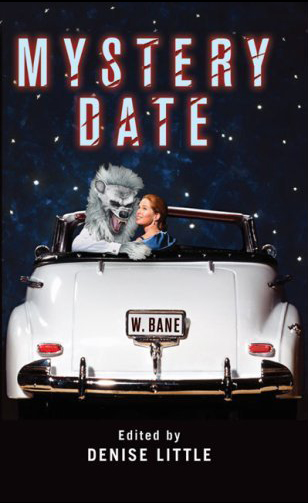
I have a new story out in the DAW anthology, Mystery DateThe tale, “Motivational Speaker,” involves a man’s rather unusual relationship with a stereo system he purchases from a department store.   Check it out.

In Writing News . . .

I finished a new story — one involving a famous Civil War sword, a ghost, and a black boy who faces a test of character in the face of the worst kind of bigotry.  I enjoyed writing it — which doesn’t always mean it’s publishable, but it’s a good sign.  

Otherwise, it’s back to the novel in progress.  Not writing nearly as many short stories these days, and that’s by design.  While I do love the form, and have no plans to stop writing them, it does come down purely to economics.  That may sound crass, and I guess it is, but if your main goal is to eventually make a living writing fiction, then you do have to pay attention to the numbers.     

Think of it this way.  Except for some of the very best short story markets out there (The New Yorker, etc.), most professional level markets for short fiction pay between six and ten cents a word.  (And there’s a ton of markets, some quite respectable, that pay considerably less.)  If you apply that six cent word rate to a 100,000 word novel, that nets you $6000. 

Six grand is pretty much the bottom for a professional-level novel advance.  Most publishers pay considerably more — and it can rise quickly as you establish your audience, whereas short stories won’t net you all that much more even if you become a bestseller (slightly more, sure, but not nearly as much an increase you’ll get with your novels).  Plus you have to remember that this doesn’t include royalties, foreign sales, movie rights, and a myriad of other ways that novels make money beyond the initial advance.  Yes, you can’t count on those, but they’re much more likely with novels than with short stories.

 So if you’re a writer with young children and a day job — which translates into a limited amount of time for your fiction — then you have a choice to make.  Even writing novels exclusively, it’s tough to make a living doing it, and if you write short stories exclusively, it’s pretty much impossible in the present day. 

Does this mean a writer who wants to make a living at his craft should forgo short stories completely?  Not hardly.  Of course, there’s the sheer love of them, but there are other reasons, too.  A reader might buy an anthology for a magazine because it has his favorite author in it, then read your story and get interested in finding books by you as well.  Plus if you do build up an audience for your novels, you can release your short stories in a collection and make more money that way.  And a popular short story can be resold many times, too, appearing in Best of the Year collections and the like.

So there are great reasons — even beyond a love of the form — for writing short stories.   But if you want to make a living from your fiction, you really have no choice but to write novels.  The good news is that squeezing in some short stories now and then is good from a publishing career point of view as well.